
July 24, 2026: Saitama, Japan
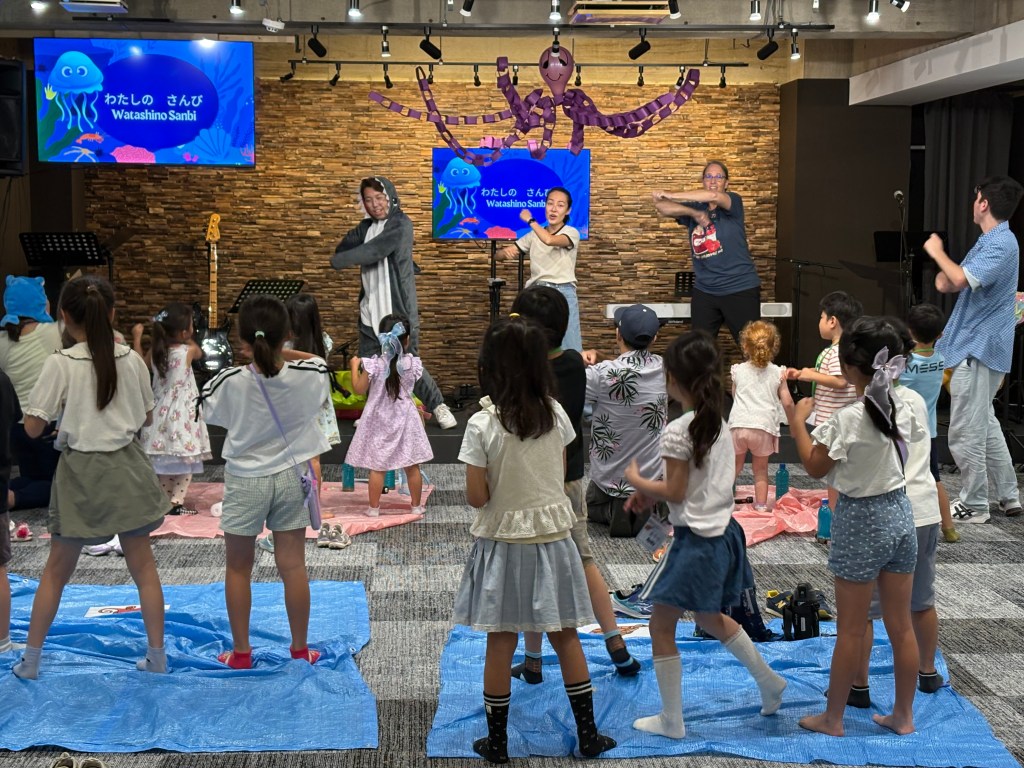
One of the greatest gifts of this trip to Japan has been discovering that God often teaches us through the questions we ask.
On Friday, our team had the privilege of serving at a children’s outreach hosted by the local church in Saitama. It reminded me of a one-day Vacation Bible School back home in Texas. The theme was Ocean Adventures, and the Bible story was Jesus calming the storm from Matthew, chapter 8. The children sang songs, made crafts, played games, ate snacks, and laughed together. It was a joyful afternoon.
Our role, however, wasn’t to lead.
The Japanese believers led the worship, taught the Bible story, facilitated the games, and welcomed the families. We simply came alongside them to serve. At times I felt like an outsider, but I also realized something important: if these children return next Sunday, they won’t be looking for the Americans. They’ll be looking for the familiar faces from the local church, the people who speak their language, understand their culture, and will continue walking with them long after we leave.
Healthy missions isn’t about replacing the local church. It’s about strengthening it.
After the event, I asked one of the children’s ministry leaders why they had chosen the story of Jesus calming the storm. Since Japan has deep Shinto roots and summer is filled with festivals that reflect those traditions, I wondered if they had intentionally selected a story demonstrating Christ’s authority over nature.
Her answer surprised me.
The story wasn’t chosen to argue against Shinto beliefs.
It was chosen because it fit the ocean theme. Children in Japan understand boats. They understand storms. And they understand what it feels like to be afraid. The story didn’t require them to know the history of Israel or the customs of first-century Judaism. It simply introduced them to Jesus in a way they could immediately understand.
That answer has stayed with me.
Sometimes, when we think about sharing our faith across cultures, we assume we need the perfect argument or the perfect apologetic. We imagine that evangelism begins by dismantling someone’s worldview.
But that’s not usually how Jesus ministered.
Again and again, He met people where they were. He spoke with fishermen about fishing, farmers about seeds, shepherds about sheep, women drawing water about living water, and anxious disciples about storms. He entered people’s ordinary experiences and revealed extraordinary truth.
Meeting people where they are is not compromising the gospel. It is following the example of Christ.
Ironically, this lesson came into even sharper focus through a conversation happening thousands of miles away.
While I’ve been serving in Japan, my husband mentioned to some of his students that I was here with our church. Their responses caught him off guard.
One student, who does not identify as a Christian, through the opportunity sounded fascinating. Another student, who serves faithfully in her local church, asked whether missionaries were simply trying to force people to believe something they didn’t want to believe.
Before my husband could fully respond, the non-Christian student spoke up.
She defended the value of opening conversations with people from different backgrounds. She recognized that listening, asking questions, and discussing beliefs is worthwhile, even when people ultimately disagree.
The non-Christian understood something that many Christians sometimes forget.
Christian faith has never spread through coercion. Jesus invited people to follow Him, but He never forced them. Faith cannot be compelled; it is a response to God’s gracious invitation. Missionaries are not called to win arguments or pressure decisions. We are called to bear witness, to faithfully share the good news of Christ with humility, love, and respect, trusting the Holy Spirit to do what only He can do.
Looking back over these past days in Japan, I think that’s one of the greatest lessons I’ve learned.
Whether serving children in Saitama or talking with neighbors back home, ministry begins by meeting people where they are. It begins with listening before speaking, serving before leading, and building relationships before expecting trust. We don’t need to manufacture opportunities or force outcomes. We simply need to faithfully point people to Jesus in language they can understand and with love they can recognize.
The local believers here have reminded me that the gospel doesn’t need to become Japanese to be understood in Japan, nor American to be understood in America. The unchanging message of Christ is carried through ordinary conversations, genuine relationships, and lives marked by humble service.
As I prepare to leave Japan, I find myself asking not only how I can support the church here, but how I can return home and meet people where they are, with the same patience, curiosity, and compassion that Jesus showed every person He encountered.
“To the weak I became weak, in order to win the weak. I have become all things to all people, so that I may by every possible means save some. Now I do all this because of the gospel, so I may become a partner in its benefits.” (1 Corinthians 9:22-23, HCSB)
Grace and Peace,
Sandra
 Context & Calling
Leave a comment