
July 22, 2026: Kumagaya, Japan
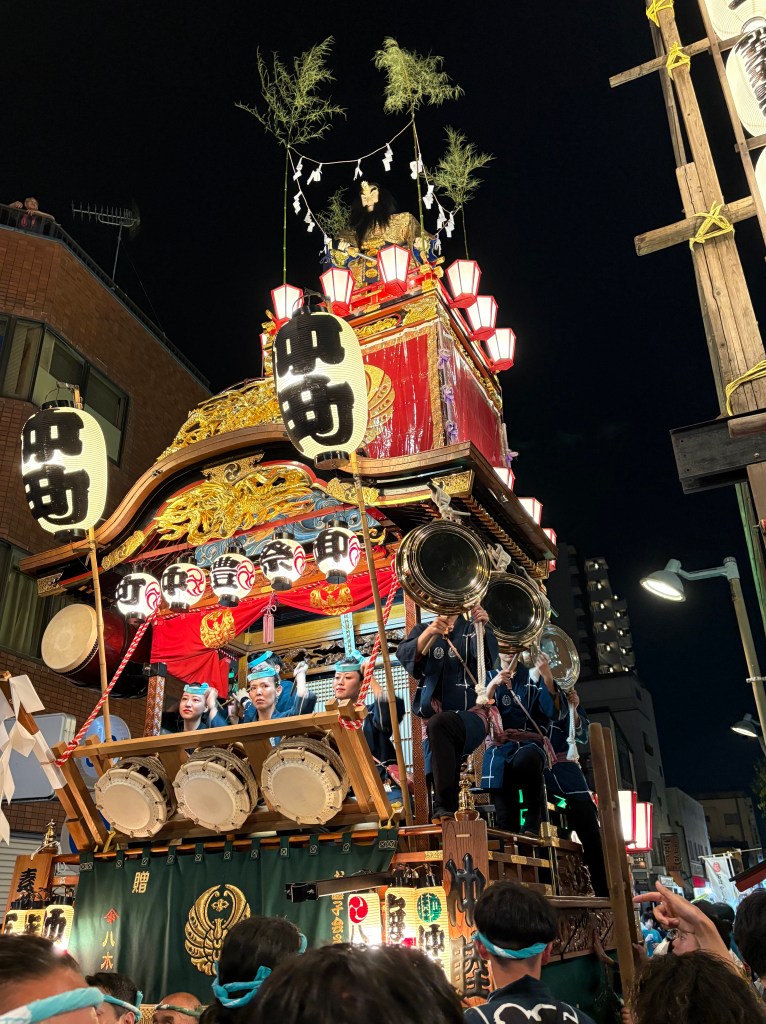
Today, I stood in the streets of Kumagaya, in Saitama Prefecture, surrounded by one of Japan’s oldest celebrations. This year marked the 300th anniversary of the Kumagaya Uchiwa Festival, and thousands of people filled the streets with excitement, anticipation, and pride.
The sound is what I will remember most.
Massive festival floats moved through the city while taiko drums thundered from every direction. Different rhythms echoed down different streets until, at the center of town, they merged into one overwhelming chorus. The energy was electric. You could feel the music in your chest before you even heard it with your ears.
As I watched, I found myself unexpectedly thinking about another celebration.
Scripture paints a picture of every tribe, every tongue, every nation gathered around the throne of God in joyful worship. If the convergence of these earthly rhythms could stir such awe, how much greater will the worship of heaven be? The God who created sound, rhythm, beauty, and celebration is worthy of infinitely more praise than any festival could ever express.
Yet my joy was mixed with sorrow.
Much of the festival is connected to Shinto traditions. As beautiful as the celebration was, I was reminded that humanity has always been prone to direct worship toward created things rather than the Creator.
At one point we spoke with a Japanese man who became emotional as he described the festival. His pride in his hometown and his gratitude for carrying on a tradition that has endured for centuries were unmistakable. Like many others we met that day, he was curious about why foreigners had come to Kumagaya.
We simply listened.
I wonder how many Japanese people hear the invitation to follow Christ and assume it means abandoning everything they love about being Japanese. If Christianity is perceived as a foreign religion rather than good news for every people and every culture, the cost can feel like losing not only one’s beliefs but also one’s heritage, community, and identity.
But perhaps that isn’t a uniquely Japanese struggle.
In America, we often assume our own traditions fit comfortably alongside Christianity. Yet we, too, can cling to cultural identities, political loyalties, family traditions, or personal ambitions in ways that compete with wholehearted devotion to Christ. Every culture has its idols. Every people, including my own, must continually ask whether our deepest allegiance belongs to Jesus.
The gospel does not erase culture; it redeems people from every culture. It calls each of us to surrender whatever competes with Christ while preserving and celebrating all that reflects God’s good design. One day, around God’s throne, there will not be one culture, one language, or one way of singing His praise. There will be countless peoples bringing the beauty of their redeemed cultures before the King.
Until that day, may my own life become a small echo of that coming kingdom.
Grace and Peace,
Sandra
 Context & Calling
Leave a comment